- +01234 567 890
- Jl. Patimura II No. 18, Denpasar
- Monday - Saturday: 9 am - 11.30 pm

Endodontics
Expert Care for Saving Your Natural Teeth
Endodontics is a specialized branch of dentistry focused on diagnosing and treating diseases of the dental pulp and the tissues surrounding the roots of teeth. Commonly known as root canal treatment, endodontic procedures help eliminate pain, control infection, and save teeth that would otherwise need to be removed.
An endodontist is a specialist dentist who has completed advanced training (usually 2–3 years of postgraduate education) specifically in managing complex root canal systems, dental trauma, cracked teeth, and retreatment cases. Their expertise, combined with the use of advanced technologies such as operating microscopes, digital imaging, ultrasonic instruments, and biocompatible materials, ensures precise, comfortable, and long-lasting treatment outcomes.
Choosing a specialist for endodontic care is essential because:
Endodontics plays a crucial role in preserving your natural smile. With specialist care, teeth that were once considered “hopeless” can now be saved, ensuring better overall oral health, function, and comfort.
- They handle complicated and curved root canal anatomies with higher accuracy
- They are trained to manage difficult cases such as previously failed root canals
- They reduce the risk of complications through skill and advanced equipment
- They improve the success rate of saving natural teeth
STEPS IN ROOT CANAL TREATMENT FOR YOUR UNDERSTANDING
1. Numbing the tooth so the treatment is painless.
2.Opening the tooth to reach the infected area.
3.Cleaning and removing germs from the inside of the roots.
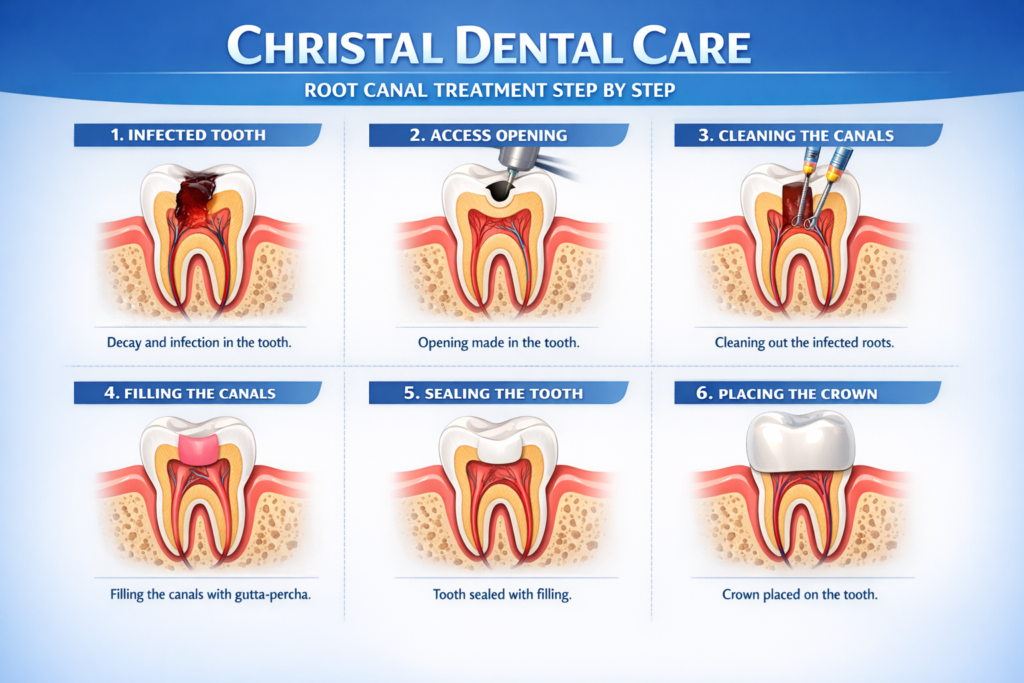
7.Putting a crown (cap) later to protect the tooth and keep it strong.
4.Shaping and disinfecting the canals.
5.Filling the canals with a safe material to seal them.
6.Closing the tooth with a filling.
7.Putting a crown (cap) later to protect the tooth and keep it strong.