- +01234 567 890
- Jl. Patimura II No. 18, Denpasar
- Monday - Saturday: 9 am - 11.30 pm

Implantology
A Permanent, Natural Solution for Missing Teeth
Implantology is the branch of dentistry that focuses on replacing missing teeth using dental implants small titanium posts placed in the jawbone to act like natural tooth roots. Once healed, these implants support crowns, bridges, or dentures, giving you teeth that look, feel, and function just like real ones. Dental implants are strong, long-lasting, and help preserve jawbone health, making them one of the best solutions for tooth replacement.
Implant treatment should always be performed by a specialist trained in implantology, such as an implant dentist, periodontist, or oral surgeon. Specialists have advanced education in bone anatomy, surgical techniques, digital planning, and implant restoration. Their expertise ensures accurate implant placement, reduced complications, faster healing, and long-term success.
Advantages of Dental Implants:
- Look and feel like natural teeth
- Allow normal chewing and speaking
- Prevent bone loss and preserve facial shape
- Do not damage nearby teeth (unlike bridges)
- Long-lasting and highly stable
- Improve confidence and quality of life
Simplicity of Implants:
Despite being a high tech treatment, implants are simple for patients usually done under local anesthesia with minimal discomfort. Most patients return to normal activities quickly, and the entire process is planned digitally for precision and safety.
Dental implants offer a comfortable, dependable, and natural looking way to restore your smile, especially when performed by an experienced specialist.
HERE ARE THE SIMPLE, PATIENT-FRIENDLY STEPS IN DENTAL IMPLANT PLACEMENT
Consultation & Planning – The specialist examines your mouth, takes X-rays or scans, and plans the exact position of the implant.
Numbing the Area – Local anesthesia is given so the procedure is completely comfortable.
Placing the Implant – A small opening is made in the gum, and the titanium implant is gently placed into the jawbone.
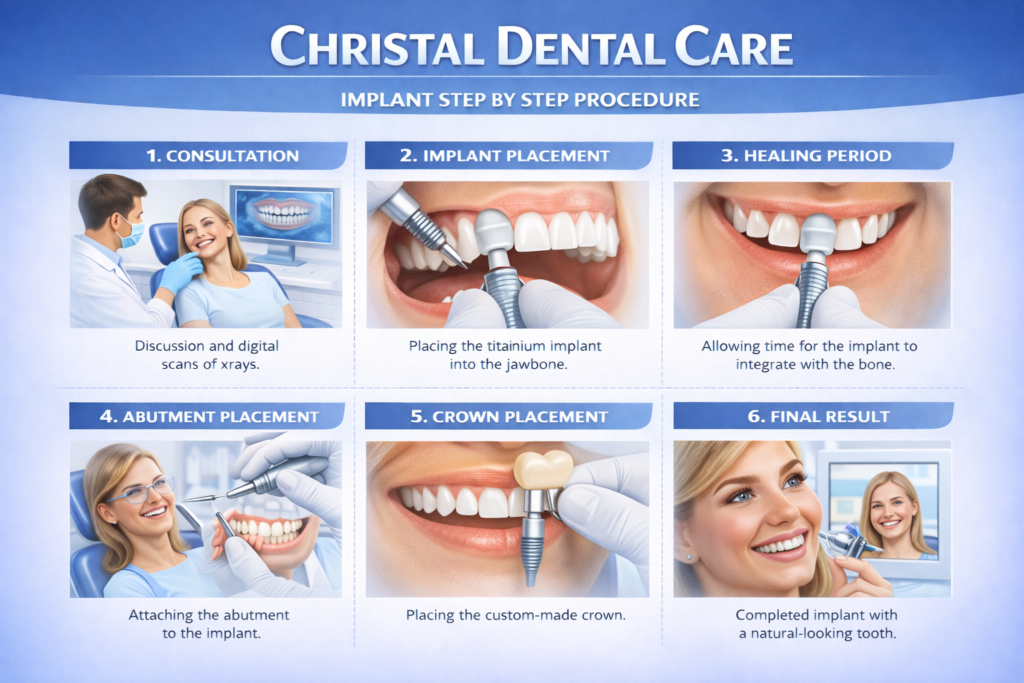
Fixing the Crown – A custom-made tooth (crown) is placed on the abutment, completing the restoration.
Healing Period (Osseointegration) – The bone naturally fuses with the implant over a few weeks to months, making it strong and stable.
Placing the Abutment – A small connector is attached to the implant once healing is complete.
Taking Impressions – Digital scans or molds are taken to design the final crown.
Fixing the Crown – A custom-made tooth (crown) is placed on the abutment, completing the restoration.
1. Numbing the tooth so the treatment is painless.
2.Opening the tooth to reach the infected area.
3.Cleaning and removing germs from the inside of the roots.
4.Shaping and disinfecting the canals.
5.Filling the canals with a safe material to seal them.
6.Closing the tooth with a filling.
7.Putting a crown (cap) later to protect the tooth and keep it strong.
STEPS IN ROOT CANAL TREATMENT FOR YOUR UNDERSTANDING
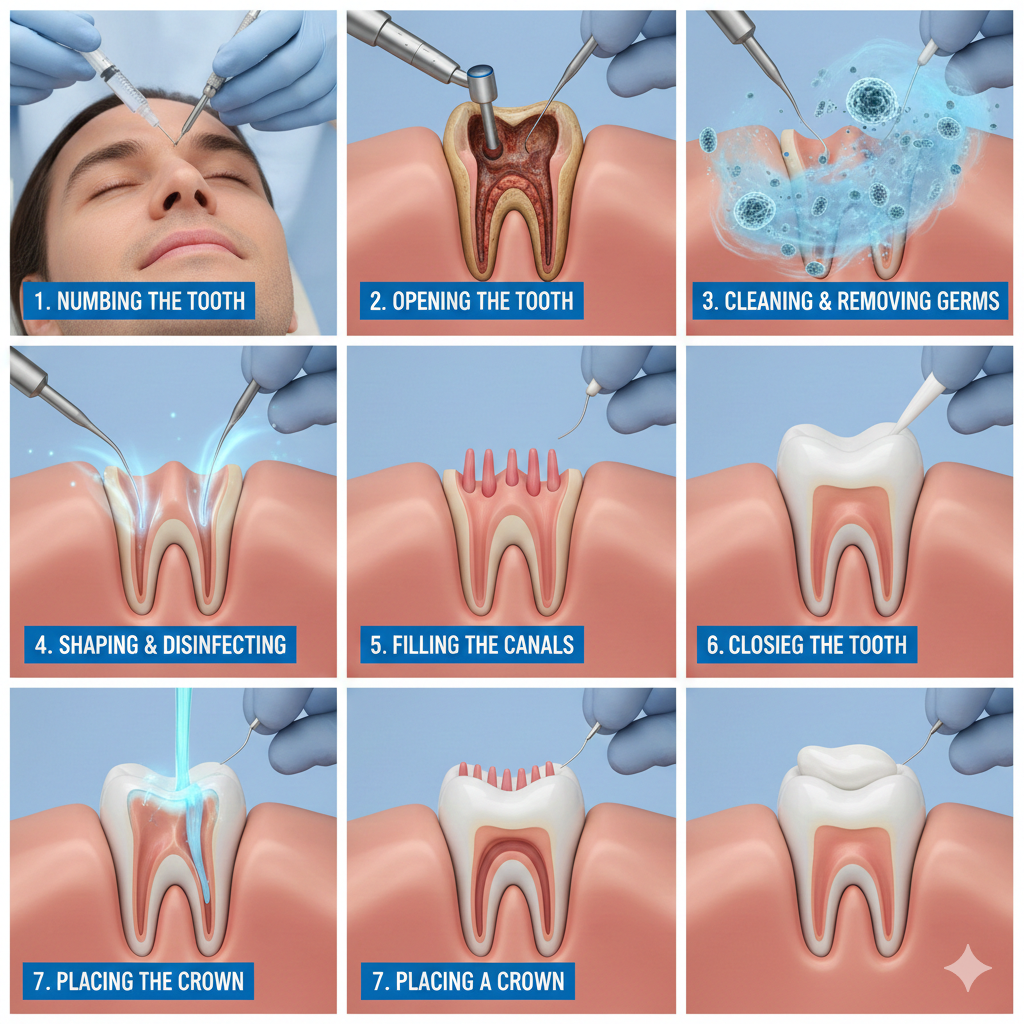
1. Numbing the tooth so the treatment is painless.
2.Opening the tooth to reach the infected area.
3.Cleaning and removing germs from the inside of the roots.
4.Shaping and disinfecting the canals.
5.Filling the canals with a safe material to seal them.
6.Closing the tooth with a filling.
7.Putting a crown (cap) later to protect the tooth and keep it strong.